
Ballet
Ballet is a style of performative dance that originated during the Italian Renaissance in the 15th century and that later came to France and Russia. From there, became a broad and highly technical style, with their own vocabulary based on French terminology. This modality has a global influence and defined the fundamental techniques used in many other dance genres and cultures. Ballet has been taught in several schools around the world, that historically incorporated their own culture and, as a result, led this art to evolve in many different ways, originating distinct methodologies (in chronological order):
- École Française (France)
- Royal Danish Ballet (August Bournonville, Denmark)
- Checchetti Method (Enrico Checchetti, Italy)
- Royal Academy of Dance (England)
- Vaganova Method (Agrippina Vaganova, Russia)
- Balanchine Method (George Balanchine, USA)
- Cuban Ballet Method (Alicia and Fernando Alonso, Cuba).
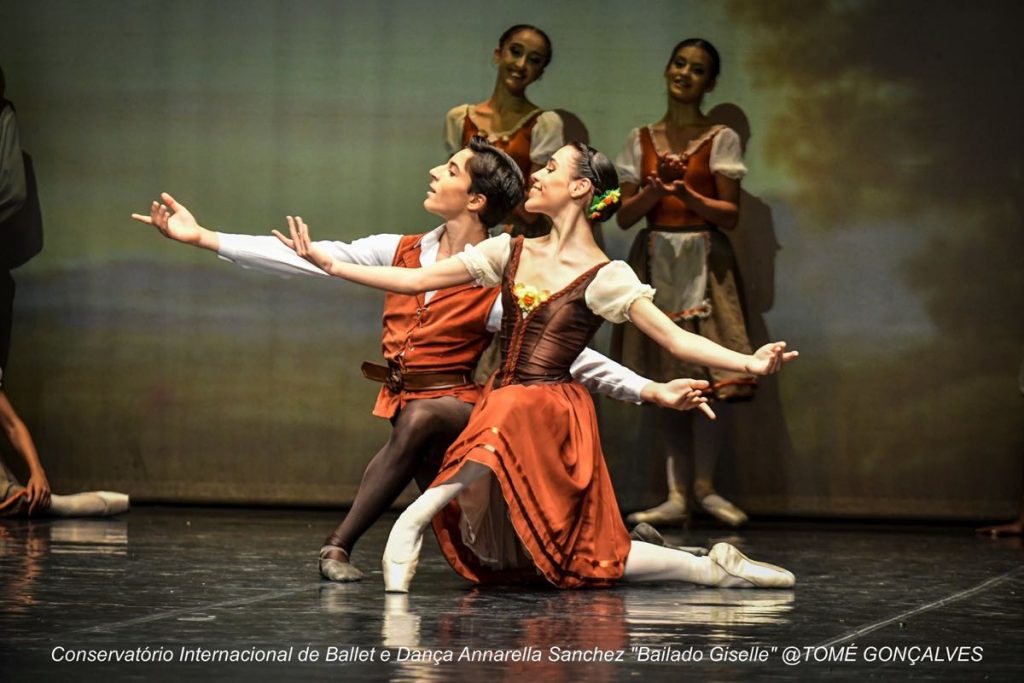
The Conservatório Internacional de Ballet e Dança Annarella Sánchez follows the methodology of the Cuban School of Ballet, the latest methodology, but also the most daring.
The Cuban method brings together the best of methodologies prior to Latin American spirit and physics, in a perfect combination of fitness for physical conditions, Latin music and artistic expression.
Classes are very expansive and work a lot with allegros, batteries and turns. Cuban dancers are known for their agility and strength.
Contemporary
Ballet is a French word that had its origin in the Italian word balletto, a diminutive of ballo(dance) that comes from Latin ballo, ballare, what does it mean “to dance“, which in turn comes from Greek “βαλλίζω” (ballizo), “to dance, jump”.
Ballet is a type of performative dance that originated during the Italian Renaissance in the 15th century and later became a form of dance for public performance in France and Russia.. From there, became a broad and highly technical style, with their own vocabulary based on French terminology. This modality has a global influence and defined the fundamental techniques used in many other dance genres and cultures. Ballet has been taught in several schools around the world, that historically incorporated their own culture and, as a result, led this art to evolve in many different ways, originating distinct methodologies (in chronological order):
- École Française (France)
- Royal Danish Ballet (August Bournonville, Denmark)
- Checchetti Method (Enrico Checchetti, Italy)
- Royal Academy of Dance (England)
- Vaganova Method (Agrippina Vaganova, Russia)
- Balanchine Method (George Balanchine, USA)
- Cuban Ballet Method (Alicia and Fernando Alonso, Cuba).
The Conservatório Internacional de Ballet e Dança Annarella Sánchez follows the methodology of the Cuban School of Ballet, the latest methodology, but also the most daring.
The Cuban method brings together the best of methodologies prior to Latin American spirit and physics, in a perfect combination of fitness for physical conditions, Latin music and artistic expression.
Classes are very expansive and work a lot with allegros, batteries and turns. Cuban dancers are known for their agility and strength.
Repertoire
Ballet of Repertoire is the type of ballet that contains a story inside it, that is represented through choreography. The Ballet of Repertoire consists of a reasonable number of dancers and choreographies to be performed. It's, because of that, a set of choreographies that aim to tell a story. These dances are composed of a set of steps that must be followed, minutely (despite sometimes, the choreographer make adaptations, that should always be cited).
The repertoire dances tell a story using dance, music and mime. They were assembled and staged during the 19th century and are reassembled, until today, with the same original music and choreography.
Below you can find some of the most popular repertoire dances:
- Swan Lake
- The Nutcracker
- Dom Quixote
- Sleeping Beauty
- Coppélia
- Cinderella
- Le Corsaire
- La Fille Mal Gardée
- Giselle
- La Sylphide
- The Bayadere
- Paquita
- Raymonda
Pointe Technique
Ballet is a French word that had its origin in the Italian word balletto, a diminutive of ballo(dance) that comes from Latin ballo, ballare, what does it mean “to dance“, which in turn comes from Greek “βαλλίζω” (ballizo), “to dance, jump”.
Ballet is a style of performative dance that originated during the Italian Renaissance in the 15th century and that later came to France and Russia. From there, became a broad and highly technical style, with their own vocabulary based on French terminology. This modality has a global influence and defined the fundamental techniques used in many other dance genres and cultures. Ballet has been taught in several schools around the world, that historically incorporated their own culture and, as a result, led this art to evolve in many different ways, originating distinct methodologies (in chronological order):
- École Française (France)
- Royal Danish Ballet (August Bournonville, Denmark)
- Checchetti Method (Enrico Checchetti, Italy)
- Royal Academy of Dance (England)
- Vaganova Method (Agrippina Vaganova, Russia)
- Balanchine Method (George Balanchine, USA)
- Cuban Ballet Method (Alicia and Fernando Alonso, Cuba).
The Conservatório Internacional de Ballet e Dança Annarella Sánchez follows the methodology of the Cuban School of Ballet, the latest methodology, but also the most daring.
The Cuban method brings together the best of methodologies prior to Latin American spirit and physics, in a perfect combination of fitness for physical conditions, Latin music and artistic expression.
Classes are very expansive and work a lot with allegros, batteries and turns. Cuban dancers are known for their agility and strength.
Pas de Deux Technique
No two is the name given to a duet, typically made up of a man and a woman, no ballet. When dancing with a partner, woman can jump higher, adopt positions that I would never be able to do alone and “float” across the stage as she is carried by her partner. A pair allows a man to lengthen his line and show off his strength.
There are four main areas focused on the Pas de Deux Technique: promenades, elevations, spins and jumps.
Character
Ballet is a French word that had its origin in the Italian word balletto, a diminutive of ballo(dance) that comes from Latin ballo, ballare, what does it mean “to dance“, which in turn comes from Greek “βαλλίζω” (ballizo), “to dance, jump”.
Ballet is a type of performative dance that originated during the Italian Renaissance in the 15th century and later became a form of dance for public performance in France and Russia.. From there, became a broad and highly technical style, with their own vocabulary based on French terminology. This modality has a global influence and defined the fundamental techniques used in many other dance genres and cultures. Ballet has been taught in several schools around the world, that historically incorporated their own culture and, as a result, led this art to evolve in many different ways, originating distinct methodologies (in chronological order):
- École Française (France)
- Royal Danish Ballet (August Bournonville, Denmark)
- Checchetti Method (Enrico Checchetti, Italy)
- Royal Academy of Dance (England)
- Vaganova Method (Agrippina Vaganova, Russia)
- Balanchine Method (George Balanchine, USA)
- Cuban Ballet Method (Alicia and Fernando Alonso, Cuba).
The Conservatório Internacional de Ballet e Dança Annarella Sánchez follows the methodology of the Cuban School of Ballet, the latest methodology, but also the most daring.
The Cuban method brings together the best of methodologies prior to Latin American spirit and physics, in a perfect combination of fitness for physical conditions, Latin music and artistic expression.
Classes are very expansive and work a lot with allegros, batteries and turns. Cuban dancers are known for their agility and strength.
Physical Preparation
Ballet is a French word that had its origin in the Italian word balletto, a diminutive of ballo(dance) that comes from Latin ballo, ballare, what does it mean “to dance“, which in turn comes from Greek “βαλλίζω” (ballizo), “to dance, jump”.
Ballet is a style of performative dance that originated during the Italian Renaissance in the 15th century and that later came to France and Russia. From there, became a broad and highly technical style, with their own vocabulary based on French terminology. This modality has a global influence and defined the fundamental techniques used in many other dance genres and cultures. Ballet has been taught in several schools around the world, that historically incorporated their own culture and, as a result, led this art to evolve in many different ways, originating distinct methodologies (in chronological order):
- École Française (France)
- Royal Danish Ballet (August Bournonville, Denmark)
- Checchetti Method (Enrico Checchetti, Italy)
- Royal Academy of Dance (England)
- Vaganova Method (Agrippina Vaganova, Russia)
- Balanchine Method (George Balanchine, USA)
- Cuban Ballet Method (Alicia and Fernando Alonso, Cuba).
The Conservatório Internacional de Ballet e Dança Annarella Sánchez follows the methodology of the Cuban School of Ballet, the latest methodology, but also the most daring.
The Cuban method brings together the best of methodologies prior to Latin American spirit and physics, in a perfect combination of fitness for physical conditions, Latin music and artistic expression.
Classes are very expansive and work a lot with allegros, batteries and turns. Cuban dancers are known for their agility and strength.
Music and Movement
Ballet is a French word that had its origin in the Italian word balletto, a diminutive of ballo(dance) that comes from Latin ballo, ballare, what does it mean “to dance“, which in turn comes from Greek “βαλλίζω” (ballizo), “to dance, jump”.
Ballet is a style of performative dance that originated during the Italian Renaissance in the 15th century and that later came to France and Russia. From there, became a broad and highly technical style, with their own vocabulary based on French terminology. This modality has a global influence and defined the fundamental techniques used in many other dance genres and cultures. Ballet has been taught in several schools around the world, that historically incorporated their own culture and, as a result, led this art to evolve in many different ways, originating distinct methodologies (in chronological order):
- École Française (France)
- Royal Danish Ballet (August Bournonville, Denmark)
- Checchetti Method (Enrico Checchetti, Italy)
- Royal Academy of Dance (England)
- Vaganova Method (Agrippina Vaganova, Russia)
- Balanchine Method (George Balanchine, USA)
- Cuban Ballet Method (Alicia and Fernando Alonso, Cuba).
The Conservatório Internacional de Ballet e Dança Annarella Sánchez follows the methodology of the Cuban School of Ballet, the latest methodology, but also the most daring.
The Cuban method brings together the best of methodologies prior to Latin American spirit and physics, in a perfect combination of fitness for physical conditions, Latin music and artistic expression.
Classes are very expansive and work a lot with allegros, batteries and turns. Cuban dancers are known for their agility and strength.